Bleeding gums, chronic bad breath, and loose teeth are not just nuisances. They are often signs of periodontal disease, and the good news is that they are treatable. At Black Hills Area Dental, Dr. Bart Samuelson takes a prevention-first approach to gum health, guiding patients through every step of care from an initial periodontal screening through deep cleaning, laser-assisted therapy, and ongoing maintenance designed to keep gum disease under control for the long term.
What Is Periodontal Disease?
Periodontal disease begins when plaque and tartar build up below the gumline, triggering inflammation in the surrounding tissue. Over time, that inflammation causes the gums to pull away from the teeth, forming pockets where bacteria continue to accumulate. As pocket depth increases, the bone and connective tissue that support the teeth begin to break down.
One of the challenges with gum disease is that the early stages are often symptom-free. Patients may have significant pocket depth and attachment loss without pain or visible changes. By the time symptoms appear, the disease has often progressed to a more advanced stage.
Periodontal disease has also been linked to broader health concerns. Research has connected untreated gum disease to an increased risk of heart disease, diabetes, stroke, and respiratory disease, which is one more reason that routine screening and early treatment matter.
Signs You May Need Periodontal Treatment
If you are experiencing any of the following, it is worth scheduling an evaluation:
- Gums that bleed when you brush or floss
- Persistent bad breath that does not resolve with brushing
- Gums that are pulling away from your teeth
- Tender, swollen, or red gum tissue
- Teeth that feel loose or appear to be shifting
- Changes in the way your bite fits together
- Pus between your teeth and gums
Periodontal Screening: How We Diagnose Gum Disease
A periodontal screening is a quick, non-invasive procedure that gives Dr. Samuelson a clear picture of your gum health. Using a specialized instrument called a periodontal probe, he measures the depth of the pockets around each tooth, both above and below the gumline. The probe gently slides along the space between the tooth and gum to assess attachment levels and identify any areas of concern.
Measurements deeper than 3 millimeters generally indicate unhealthy gum tissue. Dr. Samuelson also reviews X-rays to evaluate the bone supporting your teeth and checks for signs of bleeding, inflammation, and infection throughout the mouth. Together, these findings determine whether gum disease is present, how far it has progressed, and what treatment is appropriate.
When periodontal disease is caught in its early stages, it can often be managed with nonsurgical treatment. Catching it early prevents the chronic infections, receding gums, bone loss, and tooth loss that come with advanced disease.
Oral Cancer Prevention
Preventing this disease begins with regular oral cancer screening. We perform twice-yearly screenings to check for abnormal tissue, shifting teeth, discolored bumps, and other inconsistencies. We will discuss any findings with you and give you the knowledge to help further reduce your risk of developing oral cancer.
What is a periodontal screening?
A periodontal screening is a quick, non-invasive dental procedure performed to assess the health of your gums and the bone structure supporting your teeth. During the screening, Dr. Bart Samuelson uses a special instrument called a periodontal probe to measure the depth of the pockets around each tooth above and below the gumline. This helps identify any signs of gum disease, also known as periodontal disease. Measurements deeper than 3 millimeters often indicate unhealthy gum tissue. If detected early, periodontal disease can be treated and managed effectively. Catching gum disease in its early stages prevents more serious dental issues down the line, including chronic infections, receding gums, and bone and tooth loss.
Why is a periodontal screening important?
Periodontal disease often starts without noticeable symptoms, making it difficult to detect without professional examination. If left untreated, it can lead to tooth loss and has been linked to serious health conditions including heart disease, diabetes, stroke, and respiratory disease. Regular periodontal screenings allow for early detection and treatment, preserving not only your oral health but potentially your overall health as well. Catching and treating gum disease early is key to preventing permanent damage to the tissues and bone supporting your teeth.
How often should I get a periodontal screening?
Generally, a periodontal screening is recommended during your regular dental checkups every six months. However, if you have a history of gum disease, are a smoker, or have other risk factors, Dr. Samuelson may recommend more frequent screenings. If you are in the Rapid City area and due for a checkup, call Black Hills Area Dental at (605) 348-4657. Your oral health is our priority.
Is periodontal treatment painful?
Most periodontal treatment is comfortable. Before scaling and root planing, we numb the area with a local anesthetic so you do not feel the cleaning below the gumline. Laser therapy is typically well tolerated and often reduces post-treatment soreness compared to deep cleaning alone. Mild tenderness or sensitivity for a few days afterward is normal.
Can gum disease be reversed?
Gingivitis, the earliest stage, is often fully reversible with professional cleaning and improved home care. Once the disease progresses to periodontitis and bone loss has occurred, that bone does not grow back on its own. At that point the goal shifts to stopping the progression and keeping the condition stable through treatment and regular periodontal maintenance. This is why early screening matters so much.
Does dental insurance cover periodontal treatment?
Most dental plans cover scaling and root planing and periodontal maintenance, though the percentage covered and any annual maximums vary by plan. Laser therapy coverage is less consistent. Our front office will verify your benefits and give you a clear estimate before treatment begins.
How long does it take to recover from a deep cleaning?
Most patients return to normal eating and activity the same day. Some tenderness, mild bleeding, or sensitivity to hot and cold is common for a few days and usually resolves within a week. Dr. Samuelson will reexamine your gums at a follow-up visit to measure how well the pockets have healed.
What happens if I do not treat gum disease?
Untreated periodontal disease progresses. Gums recede, the bone supporting your teeth breaks down, teeth loosen and may eventually need to be extracted, and chewing and nutrition can be affected. Untreated gum disease has also been linked to heart disease, diabetes, stroke, and respiratory disease. Treating it early prevents damage that cannot be undone.
Our Periodontal Treatment Options
We offer a range of treatments depending on the severity and progression of your gum disease. Because each patient’s situation is different, Dr. Samuelson will recommend the approach that fits your specific needs.
Scaling and Root Planing
Scaling and root planing is a deep cleaning procedure that removes plaque and tartar from below the gumline and smooths the root surfaces to discourage future bacterial buildup. It is one of the most effective nonsurgical treatments for moderate periodontal disease. Learn more on our scaling and root planing page.
Laser-Assisted Periodontal Therapy
Following deep cleaning, the gum pockets and root surfaces are treated with a water laser to promote reattachment of the gum tissue to the tooth. The laser soothes irritation and supports faster healing, and many patients find it more comfortable than traditional treatment alone.
Guided Biofilm Therapy
Guided Biofilm Therapy is a minimally invasive approach to removing biofilm and deposits from the teeth and below the gumline. It is an effective option for early-stage disease and ongoing maintenance. Learn more on our Guided Biofilm Therapy page.
Periodontal Maintenance: Keeping Gum Disease Under Control
Periodontal disease is managed, not cured. Once you have been treated for gum disease, the structure of the pockets around your teeth changes in ways that require more frequent professional attention than a standard cleaning schedule can provide.
For patients who have completed active periodontal treatment, we typically recommend a maintenance schedule of every three to four months rather than the standard six-month interval. At each maintenance visit, Dr. Samuelson or our hygienist will re-probe your pockets to measure how well they have healed. If pockets remain deeper than 3 millimeters, we will discuss whether additional treatment is needed to keep the disease from progressing further.
Consistent periodontal maintenance is the single most important thing you can do after treatment to protect your results. Patients who stay on a regular maintenance schedule are far less likely to experience further bone loss or tooth loss over time.

Why Choose Black Hills Area Dental for Periodontal Care
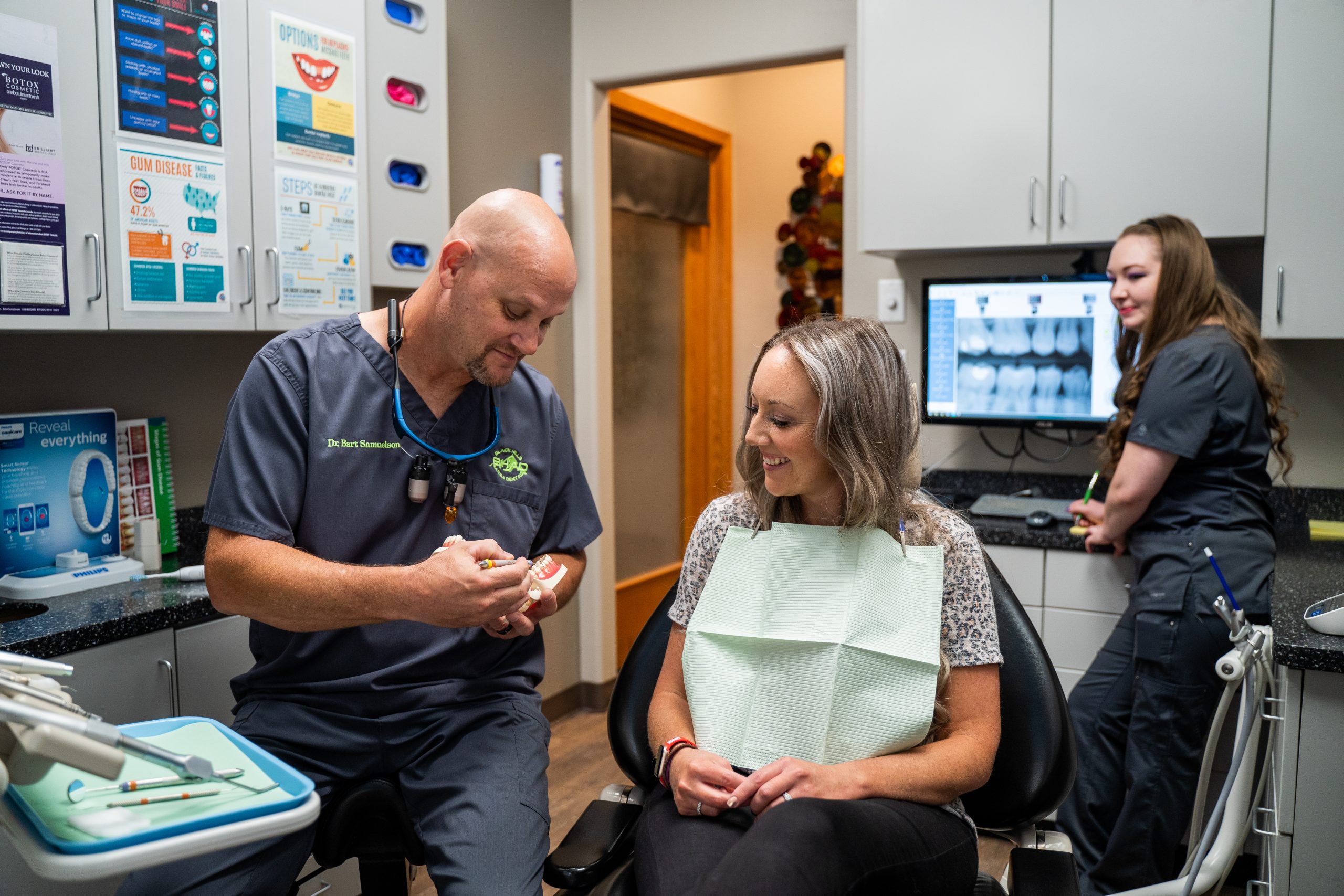
Dr. Samuelson combines clinical expertise with a genuine focus on patient education. He takes the time to explain what he is finding, what it means, and what your options are, so you can make informed decisions about your care. Our office uses laser technology to improve outcomes and reduce discomfort, and our prevention-first philosophy means we are always looking to catch problems before they require more intensive intervention. Learn more about our technology and about why patients throughout Rapid City choose our practice.
Schedule Your Periodontal Evaluation in Rapid City, SD
If you have been putting off a gum health evaluation, now is the time to schedule. Early treatment protects your teeth, your bone, and your overall health. Call Black Hills Area Dental at (605) 348-4657 or visit our contact page to request your appointment.